FurNote / Guides / pet weight loss plan
Pet Weight Loss: How to Track It Safely with Your Vet in FurNote
FurNote is a record-keeping tool, not veterinary advice, and a weight-loss plan (target weight, pace, and diet) should be set by your veterinarian. Safe weight loss is gradual: pushing too fast risks muscle loss, and in cats even 24 hours of not eating can trigger a dangerous liver condition (hepatic lipidosis) that needs emergency care. What you can do at home is record weight, follow the trend, keep a steady weighing cadence, log meals, and flag when your pet stops eating. This guide shows how to do that in FurNote.
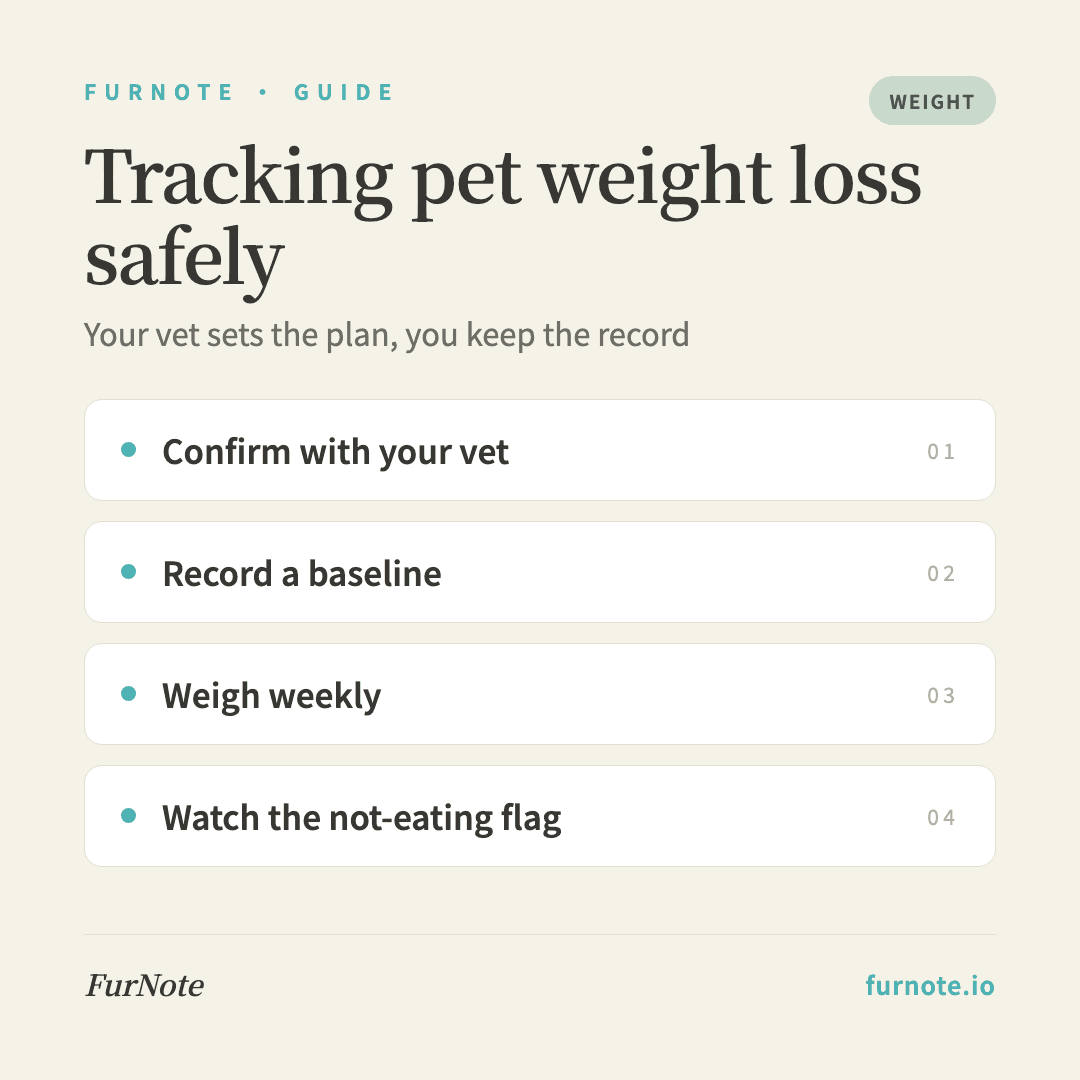
How To
Track it with FurNote, step by step
STEP 01
Confirm whether weight loss is needed (ask your vet)
Don't start just because a pet looks heavy. Body condition score (BCS 1-9) is the common yardstick, and a vet exam is the right place to confirm whether, and how much, to reduce. Note the starting BCS and record a baseline weight in FurNote.
STEP 02
Record a baseline and let the vet set the target
Your vet sets the target weight, the safe pace, and the diet. Enter your pet's current weight in Records to Weight as the starting point, so every later reading has something to compare against.
STEP 03
Weigh on the same day and time each week
Once a week is plenty; more often just adds noise from short-term swings. Add each reading in FurNote and follow the trend chart, tracking the weekly change against the plan your vet gave you.
STEP 04
Log meals with the diet record
Feed the amount and food your vet prescribed and log each meal in Records to Diet, including brand, product, and amount. A consistent food log makes it easy to see whether intake matches the plan and to spot when something slips.
STEP 05
Watch the not-eating red flag (especially cats)
A cat that won't eat for 24 hours should stop any weight-loss effort and see a vet promptly, because prolonged fasting can trigger hepatic lipidosis, and an overweight cat losing weight is at higher risk. FurNote's 24-hour no-record reminder can nudge you if nothing has been logged, but it only helps if you log meals, so record every meal during a weight-loss phase.
STEP 06
Maintain after reaching the goal
Once at target weight, keep recording, as many pets regain within a year. A monthly weigh-in plus the dashboard alert helps you catch a rebound early and check back with your vet.
FAQ
Frequently asked
- How do I know what a healthy weight looks like?
- BCS 4-5/9 is the ideal range: ribs felt but not prominent, a visible waist from above, and a belly that tucks up slightly from the side. From BCS 6 the ribs get hard to feel and the waist disappears, which is a good reason to talk to your vet.
- Do I need a prescription weight-loss food?
- Diet choice is your vet's call. Vets often prefer a therapeutic weight-management food over simply cutting the regular food, because the formulation is designed to protect muscle and keep pets feeling full. Ask your vet which is right for your pet.
- My cat is a picky eater and won't lose weight. What now?
- Never force it, since refusing food raises the liver-condition risk in cats. Bring this back to your vet, who can adjust the plan. In FurNote, keep logging meals so your vet can see exactly what's being eaten.
- How does exercise fit in?
- Gentle, appropriate activity helps, but overweight pets have vulnerable joints and hearts, so keep it moderate and follow your vet's guidance. You can jot activity in your care or diet record notes if it helps you stay consistent.
- What are the common reasons weight-loss plans fail?
- Usually one of these: family secretly feeding treats (family sharing lets everyone see the diet log, so an extra entry is easy to spot and discuss), pets not fed separately in multi-pet homes, inconsistent recording, or expecting results too fast. Steady logging and a vet-set timeline beat crash approaches.
Start tracking
Download FurNote and set up your pet's health record in a minute
Last updated: 2026-07-20