FurNote / Guides / pet emergency signs
Pet Emergency Red Flags: 8 Signs to Seek a Vet Immediately
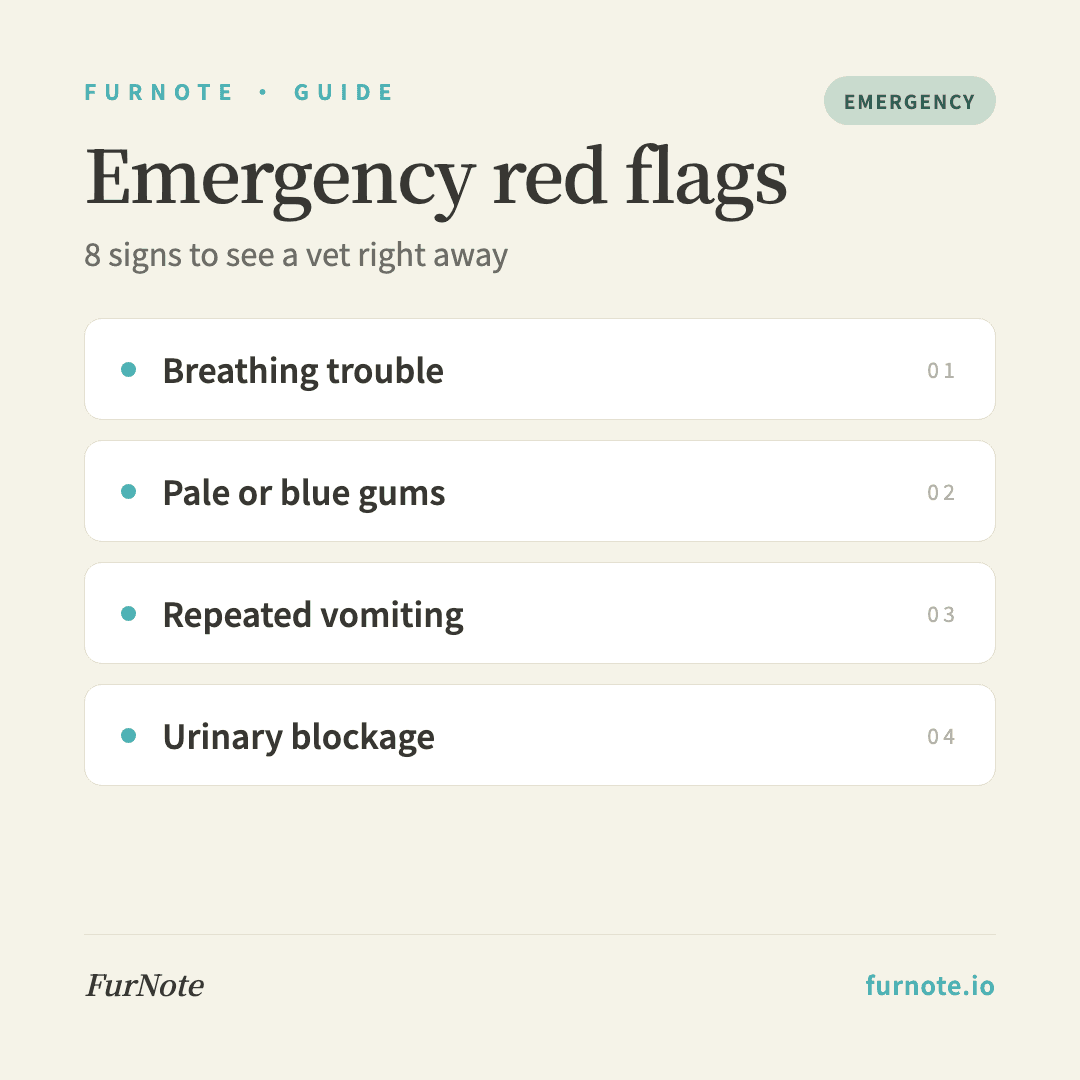
Some symptoms cannot wait until the next day. Among the situations veterinary bodies flag as emergencies, these are eight that pet owners run into most often: difficulty breathing, a change in gum color, repeated vomiting in a short time, sudden abdominal swelling, altered consciousness, seizures, obvious trauma, and urinary blockage (especially in male cats). If you notice any of them, contact your veterinarian or nearest emergency clinic right away. FurNote is a record-keeping tool, not veterinary advice, and this guide is for recognising warning signs, not for treating them at home. FurNote's role here is the record afterward: the time it happened, a photo, and a history your vet can follow.
How To
Track it with FurNote, step by step
STEP 01
Difficulty breathing (rapid, open-mouthed, blue tongue)
Laboured breathing, breathing with an open mouth, or a bluish tongue all point to a lack of oxygen and need emergency care immediately. If you safely can, film the breathing on your phone to show the vet. Afterward, record it in FurNote's symptoms log with a photo and the time it started.
STEP 02
A change in gum color (pale, blue, purple, or grey)
Healthy gums in cats and dogs are pink. Pale gums can signal internal bleeding or shock, blue or purple suggests a lack of oxygen, and grey is more serious still. This is a reason to contact your emergency clinic right away. A photo of the inside of the mouth in the symptoms log helps your vet assess quickly.
STEP 03
Repeated vomiting in a short time, or with blood or diarrhea
Forceful vomiting more than twice within 24 hours, vomit containing blood, or vomiting combined with severe diarrhea all warrant emergency care. Record the exact times in the symptoms log and photograph the vomit (color, any blood), which can be genuinely useful to the vet. Do not attempt to treat it at home; contact your clinic.
STEP 04
Sudden abdominal swelling (especially large, deep-chested dogs)
In large, deep-chested breeds, a swollen abdomen with unproductive retching, drooling, and restlessness can indicate bloat (GDV), which is life-threatening. Delay makes the outcome worse. Go to an emergency clinic immediately; there is no room to wait and see.
STEP 05
Altered consciousness (sudden weakness, unresponsive, hiding)
Sudden collapse, weakness, or a pet that will not respond can stem from several serious causes. Get to an emergency clinic, and record the time it began, the last meal, and anything they may have been exposed to. Your vet will ask, and having it noted saves precious minutes.
STEP 06
Seizures
A single brief seizure under two minutes may be observed, but seizures lasting more than five minutes, or repeated episodes within 24 hours, need emergency care. Video is invaluable, as it lets the vet see the type of seizure. Film it on your phone and note it in the symptoms log.
STEP 07
Obvious trauma (hit by car, a fall, or bleeding)
Even if a pet looks fine after being hit by a car or falling, seek emergency care. Internal bleeding, fractures, and shock can appear with a delay, and shock can temporarily mask pain, so 'still able to walk' is not a safe judgement.
STEP 08
Urinary blockage (especially a male cat straining with no urine)
A urinary blockage can become fatal within a day. A cat crouching in the litter box for five or more minutes with nothing produced, going in and out repeatedly, or licking at the genitals is an emergency, particularly in male cats. Record it in the elimination log, photograph the litter box, and get to a vet immediately.
FAQ
Frequently asked
- How do I tell 'go now' from 'see the vet tomorrow'?
- If any red flag on the emergency list appears, go immediately and do not wait. Other changes that persist for two to three days can usually wait for a regular appointment. When you are unsure, call a 24-hour animal hospital, describe the symptoms, and let them advise. A wasted trip is better than a dangerous delay.
- A red flag appears in the middle of the night and there is no clinic nearby. What now?
- Prepare in advance: look up the nearest 24-hour emergency clinic's phone number and route, and save it in your pet's notes in FurNote so you are not scrambling in a crisis. When you set off, call ahead to describe the symptoms so the team can be ready when you arrive.
- What should I bring to the emergency clinic?
- Bring your pet in a carrier or on a leash, and export the last three months of records from FurNote as a PDF (diet, weight, medications, symptoms), which can save the emergency vet 10-20 minutes of history-taking. FurNote's report is bilingual, so an English-speaking vet can read it directly. Bring pet insurance details too, if you have them.
- How do I follow up after the emergency visit?
- In FurNote's vet-visit log, record the clinic name, the diagnosis, and any prescription given. For the following 7-14 days, keep a close care log of mobility, appetite, energy, and pain. Export it before the recheck so the follow-up vet can see how recovery has gone.
- Which symptoms are common but usually not emergencies?
- A single vomit from eating too fast, brief diarrhea (under 24 hours with good energy), a mild limp where the pet can still stand, itching without a wound, or a slightly reduced appetite for a day. Observe these for 24-48 hours and see a regular vet if they do not improve. If any red flag appears, reassess immediately.
Start tracking
Download FurNote and set up your pet's health record in a minute
Last updated: 2026-07-20