FurNote / Guides / switching pet food
Switching Pet Food: A 7-14 Day Transition Log with FurNote
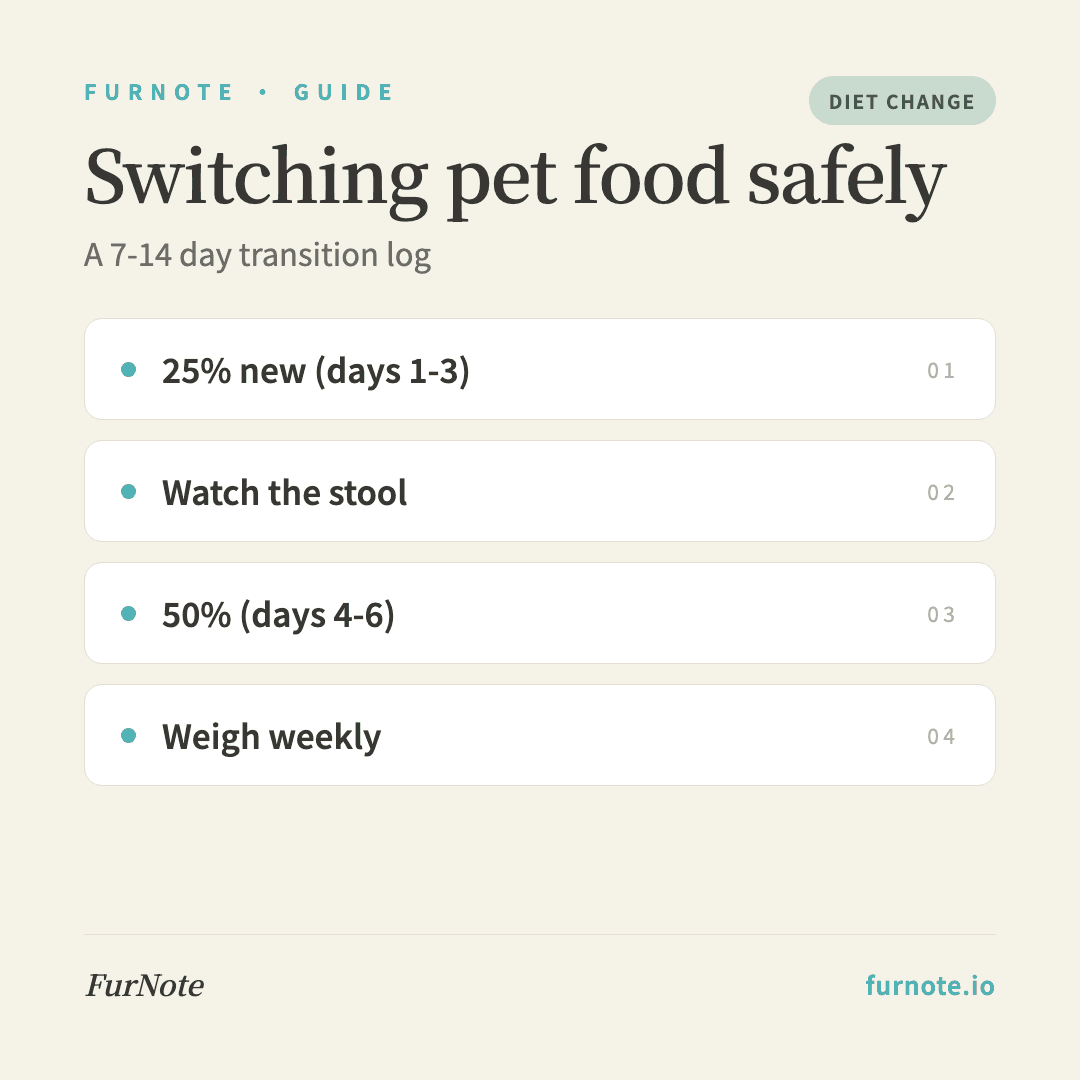
Switching food suddenly can trigger diarrhea, vomiting, or a drop in appetite, which is why AAHA recommends a gradual 7-14 day transition. A common ratio is 25% new food on days 1-3, 50% on days 4-6, and 75-100% by days 7-10. Dogs often manage in about a week; AAHA notes cats frequently need longer, sometimes up to 40 days, and sensitive stomachs or senior cats benefit from stretching it out further. FurNote is a record-keeping tool, not veterinary advice, but its diet, elimination, weight, and care logs make it easy to see how the transition is going.
How To
Track it with FurNote, step by step
STEP 01
Day 1-3: 25% new, 75% old
Mix the two foods thoroughly rather than layering them, so your pet cannot pick out only the old food. In FurNote's diet log, tick the 'food change' flag and enter both the old and new brand and product names, so the switch is easy to trace back later.
STEP 02
Day 1-3: watch stool in the elimination log
The most common early reaction is soft stool. Record stool condition and urine condition in the elimination log. If you see clearly soft stool for two days running, step back to the previous ratio and switch to a slower 14-day plan. The gut needs time to adjust to a new protein source.
STEP 03
Day 4-6: 50% new, 50% old
This stage is the most likely to cause trouble, since the proportion doubles just as the gut has settled at 25%. Watch for vomiting, food refusal, and unusual dips in energy. Log appetite and energy in the care record; three days of decline is worth attention.
STEP 04
Day 7-10: 75-100% new
A healthy sign is that the gut has adjusted, stool is back to a normal firmness, and appetite and energy have returned to baseline. If your pet is still passing soft stool or refusing food, talk to your vet. The new food may not suit them, or there may be another health issue at play.
STEP 05
Day 10-14: weigh weekly
Weigh your pet once a week for a week or two after the switch. If the new food has a different calorie density, weight may drift slightly up or down (around 2%). A loss of more than 5% over several weeks is worth a vet visit, as it can mean the new food is not being accepted or eaten in enough quantity.
FAQ
Frequently asked
- My cat is refusing the new food. What can I do?
- Cats are famously picky. Try a slower plan (14-21 days, adding 5-10% a day), keep the same main protein source (chicken to chicken, fish to fish), and switch dry and wet food in separate stages rather than at once. Most importantly, if your cat goes 24 hours without eating, stop the switch, return to the original food, and contact your vet, since prolonged fasting carries real risk for cats.
- What if I have to switch suddenly because I can't get the old food?
- Ideally, buy a two-week supply of the old food as a buffer so you can transition calmly. If that is not possible, choose a similar formula from the same brand with the same protein source, watch elimination closely, and if vomiting or diarrhea becomes severe within 48 hours, see your vet for a temporary diet recommendation.
- My pet lost weight after the switch. Should I worry?
- It depends on how much. A new food may have a different calorie density, so the same amount can mean fewer calories and a slight dip. Recalculate the portion for the new food's calories per 100g, and if weight is still down more than 5% two weeks after adjusting, discuss it with your vet, as it can signal lower digestibility or poor acceptance.
- How should I transition food in a multi-pet household?
- One pet at a time is safest. If several pets switch at once and one vomits or has diarrhea, you cannot tell who reacted. And if the new food does not suit one of them, backtracking is messier once the others are settled. FurNote logs each pet's diet separately, which makes it easy to track them individually.
- Is switching to wet food something to be extra careful with?
- Yes. Wet food's high moisture content means the gut adjusts more sensitively, so a slower 10-14 day transition is generally advised. There is also a hygiene point: unlike dry food, wet food should not sit out all day. Serve it within a few hours to avoid bacterial spoilage, and log each meal separately in the diet record.
Start tracking
Download FurNote and set up your pet's health record in a minute
Last updated: 2026-07-20